Enterprise knowledge assistants
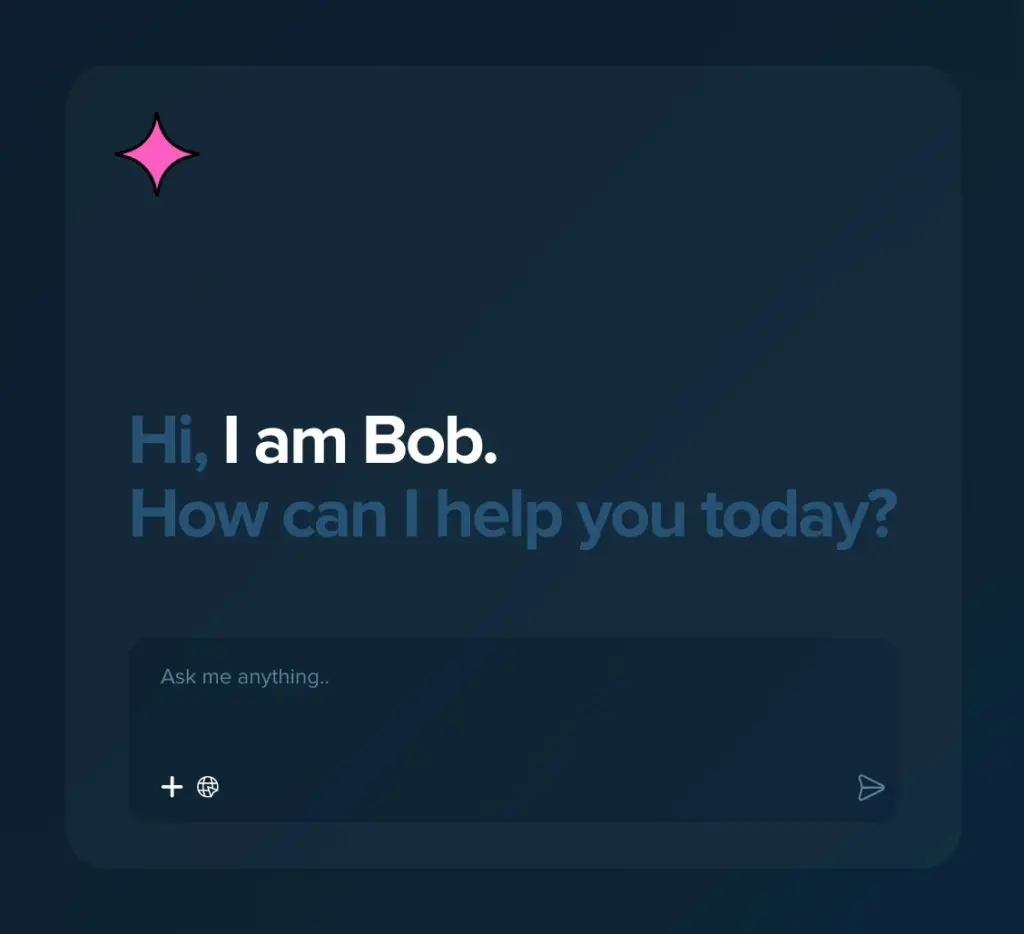
AI assistants that answer questions using trusted internal information.


Large language models are powerful, but they do not automatically know your business.
RAG allows AI to retrieve relevant information from approved sources — internal documents, policies, procedures, customer data, knowledge bases and structured databases — before generating a response.
AI assistants that answer questions using trusted internal information.
Systems that search, compare and reason across large document collections.
Natural-language search across documents, databases and business systems.
AI systems grounded in approved rules, procedures and regulatory information.
Assistants that help teams or customers find accurate product and service information.
Add retrieval and grounded AI functionality into existing SaaS, enterprise or customer-facing products.
The system retrieves the most relevant information first, then gives that context to the model before it responds.
User Question → Retrieve Relevant Information → Rank Context → Generate Response → Return Sources
01. Discover
Understand the knowledge sources, users and questions the system needs to support.
02. Prepare the data
Clean, organise and structure information for retrieval.
03. Design retrieval
Choose the right chunking, embeddings, search and ranking approach.
04. Prototype
Test retrieval quality against real queries.
05. Integrate
Connect the system to the application, permissions and data sources.
06. Evaluate
Measure retrieval accuracy, groundedness, hallucination rate and failure cases.
07. Deploy
Move into production with monitoring and controls.
08. Improve
Use query and retrieval data to continuously refine performance.
Use cases
Financial services
Mortgage and lending
Legal and professional services
Healthcare
Compliance
Customer support
Internal knowledge
Research
Technical support
SaaS applications
Policy-heavy organisations
Document-intensive businesses
We've built document-heavy AI systems like an AI-powered mortgage underwriting platform using RAG across thousands of lending guidelines, where retrieval quality directly affects the usefulness of the product.
We build the data, application and infrastructure around the retrieval layer.
Access control and data boundaries can be incorporated directly into retrieval.
Evaluation, observability, scalability and reliability are considered throughout delivery.
We design and build AI systems that move beyond demos. From AI agents and RAG platforms to generative AI applications and enterprise integrations, WeUno helps businesses turn AI into reliable, usable products.

We build AI agents that can do more than answer questions. WeUno designs agentic systems that can reason across tasks, use tools, retrieve trusted information and take controlled actions across business systems.
We build generative AI applications that help businesses create, analyse, summarise and interact with information more effectively. From intelligent assistants and content systems to document analysis and product features, WeUno turns foundation models into practical software.
Add AI to the tools and workflows you already use. WeUno connects AI models, agents and automation into existing software so businesses can improve efficiency without rebuilding everything from scratch.
As AI becomes embedded into business-critical workflows, control matters as much as capability. WeUno helps organisations design AI systems with clear rules around access, data, decisions, monitoring and human oversight.