AI assistants
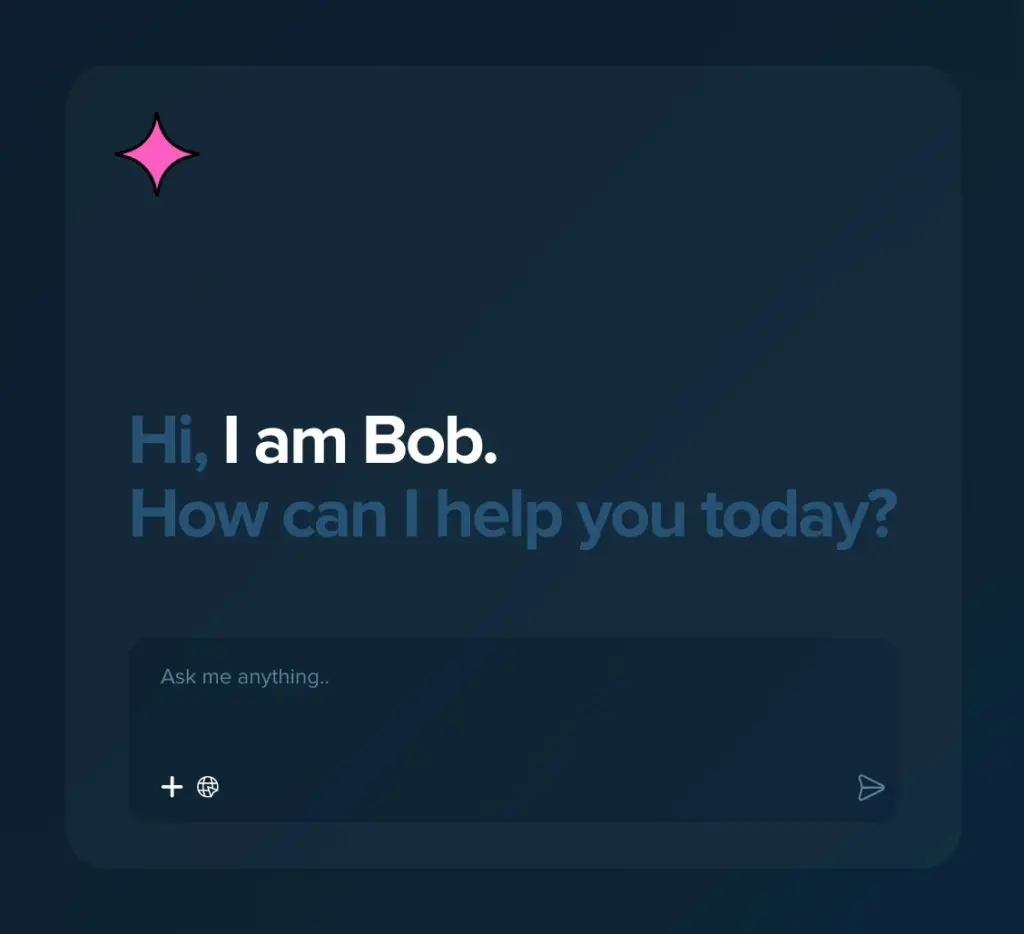
Intelligent assistants that support users with information, decisions and tasks inside digital products.


We build generative AI applications that help businesses create, analyse, summarise and interact with information more effectively. From intelligent assistants and content systems to document analysis and product features, WeUno turns foundation models into practical software.
Our generative AI development includes
AI assistants
Content generation
Document analysis
Summarisation
Intelligent search
Knowledge systems
Recommendation features
Conversational interfaces
Workflow support
Custom AI applications
Intelligent assistants that support users with information, decisions and tasks inside digital products.
Applications that generate structured content, reports, summaries and business materials from approved data and instructions.
Systems that read, extract, compare and reason across large volumes of documents.
Natural-language interfaces that allow users to interact with software, data and knowledge more easily.
Search experiences that understand meaning and context rather than relying only on keywords.
Products that bring together enterprise information and generative AI to help users find and understand what they need.
Generative AI becomes useful when it is connected to the right data, workflows and user experience. We help businesses move beyond simple prompt interfaces by building AI into products and processes where it can support real work.
That includes working across formats where it’s useful, not just plain text: text, images, documents, audio and structured data.
01. Discover
Understand the problem, users and data.
02. Define
Choose where generative AI adds real value.
03. Prototype
Test models, prompts and workflows.
04. Design
Create the right user experience around the AI.
05. Engineer
Build the application, integrations and AI layer.
06. Evaluate
Measure quality, reliability and edge cases.
07. Deploy
Release into production with monitoring and controls.
08. Improve
Refine the system using real usage and feedback.
Use cases
Customer service
Internal knowledge
Professional services
Financial services
Healthcare workflows
SaaS products
Research
Education
Content-heavy businesses
Document processing
Sales enablement
Enterprise operations
We build the full product around the model, not just the model integration.
We start with the user problem and workflow.
We choose the right model for the job — balancing quality, speed, cost and privacy — rather than defaulting to the same one for everything.
Evaluation, security, scalability and monitoring are considered from the beginning.
WeUno is a UK AI development company building production AI products, agents, RAG systems and intelligent automation. Our 40+ engineering team takes AI from product strategy and prototyping through integration, deployment and ongoing improvement.

WeUno is a UK RAG development company building production retrieval-augmented generation systems that connect AI to trusted enterprise knowledge. Our experience includes mortgage underwriting AI working across 3,000+ pages of lending and investor guidance.
We build AI agents that can do more than answer questions. WeUno designs agentic systems that can reason across tasks, use tools, retrieve trusted information and take controlled actions across business systems.
We help businesses turn AI ideas into complete digital products. From product discovery and UX to model integration, backend engineering and production deployment, WeUno builds AI-native platforms designed around real users and real business value.
Add AI to the tools and workflows you already use. WeUno connects AI models, agents and automation into existing software so businesses can improve efficiency without rebuilding everything from scratch.