Task-based AI agents
Agents designed to complete specific operational or knowledge-based tasks.

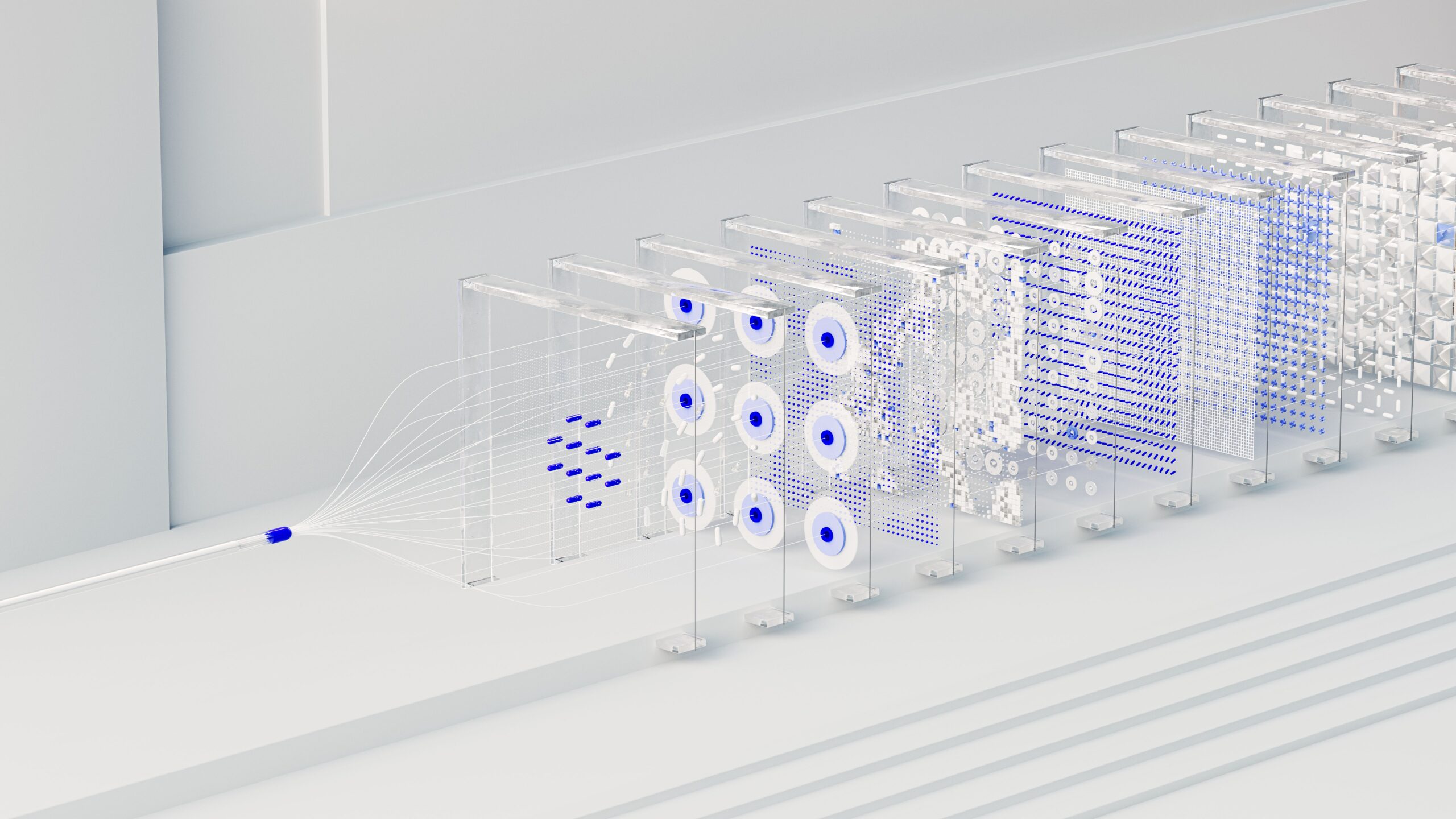
A chatbot that answers questions is not the same as a system that can complete one. A true agent understands the objective, breaks it into steps, retrieves information and calls the right tools and APIs.
It can coordinate with other agents, make decisions within defined limits, and escalate to a person when approval is genuinely needed. If you are deciding between an AI assistant and a system that can take controlled actions, read our Agentic AI vs Generative AI guide. For budgeting, see our AI Agent Development Cost UK 2026 guide.
Tool and system integration
CRMs
ERP systems
Internal APIs
Databases
Document repositories
Email systems
SaaS products
Search platforms
Cloud services
Workflow tools
Custom business applications
Agents designed to complete specific operational or knowledge-based tasks.
Multiple specialised agents working together across different parts of a workflow.
Assistants embedded into business applications that help users complete complex work faster.
Systems that gather information from approved sources, analyse it and produce structured outputs.
Agents that coordinate actions across APIs, databases and enterprise platforms.
Agents that can retrieve, analyse and reason across large collections of business documents.
A practical agentic workflow often looks like the flow below. Each stage can be controlled through policies, permissions and approval rules. The goal is not simply to make an agent autonomous — it is to give it the right level of autonomy for the task.
Collects and validates relevant information.
Interprets the information against business rules.
Performs approved actions in connected systems.
Checks outputs before completion.
01. Discover
Identify the workflow, users and business outcome.
02. Map the workflow
Understand each decision, system and action involved.
03. Define authority
Decide what the agent can do independently and where approval is required.
04. Prototype
Test reasoning, retrieval and tool usage.
05. Integrate
Connect the agent to approved systems and data.
06. Evaluate
Test task completion, reasoning accuracy, tool selection and failure scenarios.
07. Deploy
Release with monitoring, permissions and controls.
08. Improve
Refine behaviour based on real-world usage, cost and latency.
Use cases
Customer operations
Research
Document processing
Compliance workflows
Sales operations
Internal knowledge
Financial analysis
Support teams
Software operations
Data workflows
Administrative processes
Enterprise automation
We build both the AI layer and the systems it needs to work with.
We start with the business process rather than the agent technology.
Agents can be connected to existing APIs, applications and data platforms.
Permissions, approval points and monitoring are considered from the start.
WeUno is a UK AI development company building production AI products, agents, RAG systems and intelligent automation. Our 40+ engineering team takes AI from product strategy and prototyping through integration, deployment and ongoing improvement.

WeUno is a UK RAG development company building production retrieval-augmented generation systems that connect AI to trusted enterprise knowledge. Our experience includes mortgage underwriting AI working across 3,000+ pages of lending and investor guidance.
WeUno develops generative AI applications for businesses, including intelligent assistants, document analysis, summarisation, knowledge systems and AI features embedded into digital products.
Add AI to the tools and workflows you already use. WeUno connects AI models, agents and automation into existing software so businesses can improve efficiency without rebuilding everything from scratch.
As AI becomes embedded into business-critical workflows, control matters as much as capability. WeUno helps organisations design AI systems with clear rules around access, data, decisions, monitoring and human oversight.